

Menu
Foundation Repair ≠ Garage Project: Why Pros Matter in CT
Concrete Foundation Repair Bridgeport
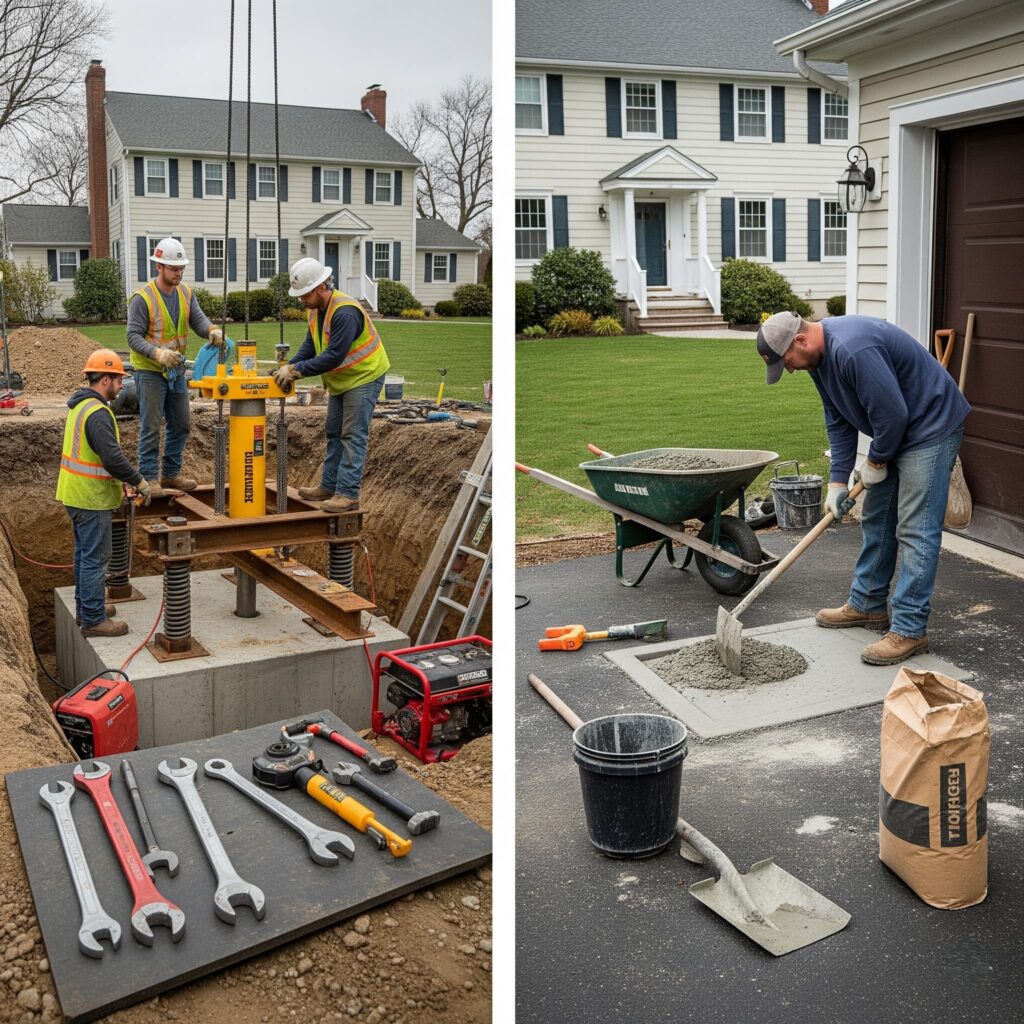
Many Connecticut homeowners approach concrete foundation repair with the same DIY mindset they bring to garage projects or weekend concrete work. However, foundation issues in Connecticut carry unique challenges that extend far beyond typical home improvement projects. From Bridgeport’s coastal properties near Long Island Sound to inland areas around the University of Bridgeport campus, foundation problems require specialized expertise, proper licensing, and an understanding of Connecticut’s specific regulatory environment. The distinction between simple concrete work and foundation repair becomes critical when structural integrity and safety are at stake.
Connecticut’s Unique Foundation Challenges
Connecticut has very unique and difficult-to-resolve foundation issues, which make the use of professional services a necessity as opposed to an option. In addition, the crumbling foundation issue in Connecticut, which has affected up to 34,000 homes built between 1983 and 2000, illustrates the difficulties involved in identifying and resolving concrete-based foundation issues within Connecticut.
Pyrrhotite-Based Foundation Damage
When pyrrhotite was present in concrete aggregate supplied by certain quarries in Connecticut, this resulted in a broad-scale foundation crisis in Connecticut requiring specialized knowledge and testing. Pyrrhotite is an iron sulfide mineral, which causes concrete to deteriorate slowly due to the interaction of oxygen and water and the subsequent formation of cracks, which are often not visible for 10 to 30 years. Therefore, licensed professional engineers must inspect the property visually and obtain samples of concrete through core testing in order to determine the type and extent of pyrrhotite-related damage in accordance with Connecticut Foundation Solutions Indemnity Company (CFISC) guidelines.
Environmental Conditions Associated with Coastal Areas
Due to its coastal location, Bridgeport, Connecticut, has additional foundation problems, exposure to salt air, freeze-thaw cycles, and variable soils. Properties located adjacent to areas such as Steel Point or Marina Village have accelerated rates of deterioration of concrete and, therefore, require specialized materials and techniques for repair. Due to the environmental conditions found along Connecticut’s coast, the selection of the correct materials and the application of those materials will require the knowledge of a professional engineer who has experience in repairing foundations in coastal environments.
Regulatory Requirements for Licensed Foundation Services
There are very stringent regulatory requirements governing the services provided by licensed professionals in connection with foundation work in Connecticut, which separates them from the typical “do-it-yourself” projects.
Engineering License Requirements
Engineers licensed in the State of Connecticut are required to perform all assessments and repairs to foundations in many cases. All visual inspections related to the filing of claims for crumbling foundations must be conducted by licensed engineers practicing in Connecticut. Furthermore, licensed engineers are also required to oversee all structural work related to foundation repairs.
Registration Requirements for Home Improvement Contractors
In order to engage in the business of providing foundation repair services, all contractors must be registered with the State of Connecticut’s Department of Consumer Protection. Salespersons employed by contractors engaged in the provision of foundation repair services are also required to be registered with the Department of Consumer Protection. In addition to being registered, all contractors providing foundation repair services in Connecticut are required to demonstrate compliance with applicable laws and regulations, including the requirement for deposit security bonds if the contractor is participating in the CFISC program.
Technical Complexities Exceeding DIY Capability
Foundation repair involves complexities of technology, technique, and expertise that go well beyond what would be expected in the typical home improvement project.
Specialized Tools and Methods
Repair of foundations in Connecticut requires specialized tools and equipment that are not available at typical retail outlets, including hydraulic lifting equipment, special underpinning equipment, and equipment used to inject concrete into damaged areas. Underpinning projects utilizing push or helical piers extend deep into the load-bearing soil stratum, and, therefore, require precise engineering calculations and professional installation. The techniques utilized in these repairs represent significant expertise that is generally not possessed by individuals performing DIY concrete repairs.
Structural Analysis
Foundation repair impacts entire structural systems, requiring a comprehensive understanding of how loads are distributed in structures, soil mechanics, and local building codes. Repairs to bowing walls utilizing wall plate anchors or helical tieback anchors must be integrated into the overall structural system to avoid the creation of new problems. Properties located throughout Bridgeport’s diverse neighborhoods have various soil conditions and structural requirements, which necessitate the analysis of a professional engineer.
Financial Consequences of DIY Foundation Repairs
DIY foundation repairs usually result in higher long-term costs for the homeowner than using a professional to do the repair. Understanding these financial consequences allows homeowners to make informed decisions regarding their approach to repairs.
Temporary Measures That Are Inadequate
Typical DIY solutions, such as carpenter’s lifts, self-leveling compound, and concrete haunches, only offer cosmetic repairs and may exacerbate existing problems. These remedies add weight to settling foundations, which accelerates damage and increases ultimate repair costs. In Bridgeport, DIY measures, which fail to address root-cause problems, may accelerate the settlement of properties located in areas such as Black Rock or the East End.
Value of Professional Foundation Repair in Connecticut
Complete replacement foundation repairs in Connecticut cost anywhere from $150,000 to $250,000; however, they include full repair solutions with proper engineering oversight. The CFISC provides financial assistance to qualified claimants for repairs made to eligible properties, thereby making professional repair a viable option for homeowners seeking to resolve their foundation problems rather than attempt substandard DIY repairs that will likely require professional correction later.
Insurance and Warranties
Professional foundation repair offers insurance coverage and warranty protections that are not available through DIY repairs. These protections become especially important due to the long-term nature of foundation performance and Connecticut’s harsh environmental conditions.
Liability and Worker’s Compensation
Licensed foundation contractors carry liability insurance and workers’ compensation insurance that protects homeowners from potential claims resulting from injuries or damages to the property sustained during the course of the repair. DIY foundation repairs leave the homeowner liable for any injuries or damages that occur during the course of the repair. Additionally, licensed contractors provide project-specific insurance coverage that protects the homeowner from claims based upon defects in materials and/or defective materials used in the course of the repair.
Warranty Protections for Long-Term Property Preservation
Reputable foundation companies provide warranties for repairs lasting 10 years or longer, and some even offer lifetime guarantees on certain repair methods. These warranties protect the homeowner from future foundation problems and provide a level of comfort not attainable through DIY repairs. The ongoing crumbling foundation problem in Connecticut highlights the importance of obtaining warranty coverage to protect a property for the long-term.
Differentiating Between Foundation Repair and Typical Concrete Projects
An awareness of the distinction between repairing a foundation and completing a typical concrete project will help homeowners realize when professional expertise is necessary versus when it is merely desirable. Both short-term safety and long-term preservation of property values depend on this differentiation.
Suitable DIY Concrete Projects
Concrete projects involving small amounts of work, such as patio repairs, simple crack filling, or garage floor resurfacing, may be completed by experienced DIY homeowners. These projects are limited to ground-level work and do not involve structural implications, nor do they require the use of specialized tools or equipment. Many neighborhoods in Bridgeport may be suited for DIY completion of decorative concrete work or minor maintenance projects that do not involve the structural integrity of the property.
Foundation Projects Requiring Professional Services
- Underpinning
- Large-scale crack repair
- Foundation lifting
- Basement waterproofing
- Structural modifications
Safety and Code Compliance Issues
Both safety and code compliance issues exist in foundation repair that extend well beyond typical DIY project capabilities. An awareness of these issues will help to protect both immediate safety and long-term compliance.
Structural Safety Concerns
Failure to properly complete foundation repair can compromise entire structural systems, thus creating a hazard to the people occupying the property and surrounding neighbors. Lifting and underpinning a foundation must be done precisely to prevent structural failure during the course of the construction. A contractor providing foundation repair must follow established safety procedures and have the equipment necessary to safely manipulate a foundation.
Compliance with Building Codes
State and local building codes establish requirements for all aspects of foundation work, including the acquisition of proper permits, inspections, and material specifications. A contractor providing foundation repair must comply with the building codes in effect in the jurisdiction where the property is located. Failure to comply with applicable building codes will create compliance issues during the sale of the property or during an insurance claim.
Early Recognition of the Need for Professional Assistance
Recognizing early on the signs that indicate the need for a professional to assess and remedy a foundation issue will allow homeowners to address problems prior to them becoming catastrophic. Often, early professional assessment can also preclude the need for more costly repairs down the road.
Structural Indicators of Potential Foundation Problems
Foundations experiencing horizontal cracking patterns, cracks wider than 1/8 inch, or other forms of foundation movement should be evaluated professionally immediately. Properties in Bridgeport exhibiting uneven settling, door and/or window misalignment, or visible foundation damage should be evaluated by a professional engineer to determine the best course of action for repairs.
Indications of Water Problems
Properties with foundation-related water problems, such as persistent moisture, flooding, or drainage issues, require professional remedial solutions to correct. Connecticut’s climate and coastal influence create complex moisture management issues that go well beyond the capability of typical DIY solutions. A professional contractor will provide comprehensive drainage solutions that address the current situation as well as the prevention of moisture problems in the long-term.
Professional Foundation Repair Services Provided by Bridgeport Concrete Solutions
At Bridgeport Concrete Solutions, we have a thorough understanding of the significant technical differences between repairing a foundation and completing a typical concrete project. As a result, our licensed professionals have the technical knowledge, equipment, and regulatory compliance to provide proper foundation repair in Connecticut’s uniquely challenging environment. We maintain registration with the Connecticut Department of Consumer Protection, and we provide comprehensive insurance coverage for our customers during the course of the repair.
Regardless of whether you are experiencing crumbling foundation issues, structural settling, or foundation waterproofing issues, we have the professional expertise to provide the necessary repairs to ensure the long-term structural integrity and compliance with regulatory requirements of your property. By adhering to high levels of professionalism and technical competency, we clearly differentiate between necessary foundation work and typical DIY concrete projects, so that your property receives the necessary professional attention when the integrity of your structure is most critical.
LATEST POSTS

Eco-Friendly Commercial Concrete Materials Popular in Bridgeport
October 2, 2025
No Comments

Decorative Concrete for Foundation Aesthetics in Bridgeport
September 30, 2025
No Comments