
Menu
Common Concrete Repairs in Bridgeport: From Cracks to Leveling
Concrete Repair Bridgeport
Bridgeport’s coastal climate and freeze-thaw cycles create unique challenges for concrete structures throughout the city. From residential driveways near the developing Steelpointe Harbor to commercial sidewalks in downtown, understanding common concrete repair needs helps property owners maintain safe, attractive surfaces while protecting their investment.
Concrete Crack Repair Solutions
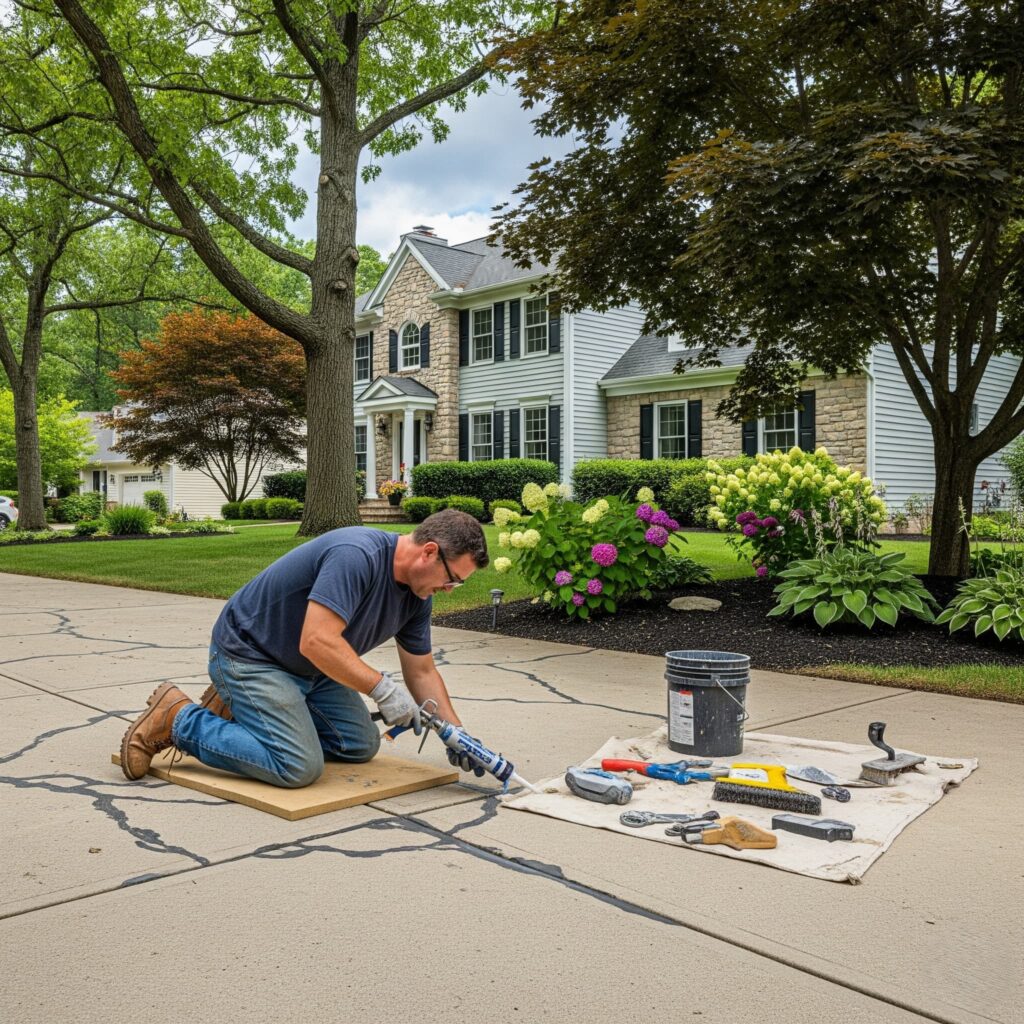
Repairing concrete cracks represents the most common maintenance issue that homeowners face in the Bridgeport area. Cracks occur because of many factors, including freeze-thaw cycle activity, settling foundations, and expansive thermal changes in the concrete structure. The type of repair (whether it is structural or cosmetic) and size/location of the crack(s) determine the best course of action to take when performing the repair.
Small crack sizes less than 0.5 inches in width are repaired with flexible polyurethane sealants. Flexible polyurethane sealants allow for natural concrete movement and provide a protective barrier against water penetration, which causes further damage. Self-leveling concrete sealers are generally used for horizontal surfaces, such as driveways and sidewalks, while non-sag sealers are generally used for vertical applications, such as foundation walls.
Epoxy-Based Crack Injection Methods for Deeper/Structural Cracks
Deep or structural cracks require professional assistance via the use of epoxy-based crack injection methods. Epoxy-based crack injection techniques involve placing epoxy resin into the crack(s) while pressurizing the resin to bond the separated concrete portions together, and to restore the structural integrity of the concrete structure. Epoxy-based crack injection methods have been demonstrated to be very effective for the repair of cracks within concrete structures and provide a strong, durable repair to the damaged area of the concrete structure.
Before beginning the epoxy-based crack injection process, contractors thoroughly clean the crack(s) to remove any debris. Contractors then install one or more injection ports along the length of the crack(s). Following the placement of the injection ports, the contractor then injects the epoxy resin into the crack(s) from the bottom up (lowest point first) to ensure complete filling of the crack(s). Epoxy-based crack injection methods are capable of producing long-lasting repairs that may last longer than the surrounding undamaged concrete.
Concrete Leveling for Settling Concrete Surfaces
Settled concrete surfaces present a safety concern to individuals walking on the surface and detract from the overall appearance of the property. Concrete leveling is a cost-effective alternative to replacing the entire concrete surface. There are three main methods for concrete leveling: mudjacking, polyurethane foam injection (also known as polyjacking), and stone slurry grout leveling.
Mudjacking involves drilling holes through the settled concrete slab and pumping a cementitious material under the slab to raise the slab back to its original elevation. Mudjacking is a cost-effective solution for sidewalks, driveways, and patios that do not carry significant structural loads.
Polyurethane Foam Injection (Polyjacking)
Polyurethane foam injection is considered to be the latest and most advanced concrete leveling technology available today. Once the polyurethane foam is injected into the space below the slab, it rapidly expands and lifts the settled concrete with precise control. Polyurethane foam has good void-filling characteristics and resists subsequent settlement of the slab.
Stone Slurry Grout Leveling
Stone slurry grout leveling utilizes a mixture of pulverized limestone and water to slowly fill the voids located beneath the slabs. The consistency of the mixture can be adjusted depending on the application. Thin mixtures of the grout have better void-filling characteristics, while thick mixtures of the grout provide greater lifting capabilities.
Repair of Spalling Concrete and Resurfacing
Spalling of concrete, defined as cracking, flaking, or pitting of the surface of concrete, is a widespread problem faced by owners of properties in Bridgeport, primarily caused by the use of de-icing salt and/or exposure to high humidity (moisture) found near coastal regions. Prompt remediation of the surface deterioration is required to prevent further structural degradation.
The initial step in the repair of spalling concrete is to remove all loose or deteriorated concrete from the affected surface using hammers, chisels, or grinders. The next step is to thoroughly clean the surface to eliminate dirt, debris, and other contaminants that may interfere with the adhesion of the repair material to the existing concrete. Before applying new concrete to a section of the affected surface containing corroded reinforcement steel, the steel must be treated.
Resurfacing and Overlays
When the extent of the spalling damage is too severe to be repaired using a spalling repair product alone, a resurfacing product can be applied to restore the functionality of the surface. A resurfacing product is a thin layer of a specialized concrete resurfacer that is applied over the existing damaged surface. The resurfacer produces a new, smooth surface. Polymer-modified overlays are more durable and flexible than traditional overlays, and are suitable for high-traffic areas such as commercial walkways located downtown or residential driveways. In addition to restoring functionality, concrete overlays can also enhance the aesthetic appeal of the surface. Concrete overlays are particularly useful for properties located in areas with high curb appeal, such as the entertainment district of Bridgeport.
Prevention and Repair of Freeze-Thaw Damage
Bridgeport’s climate creates ideal conditions for freeze-thaw damage, especially during the winter months when moisture enters the concrete and expands upon freezing. The repeated cycling process of freezing and thawing gradually wears away the concrete surface, causing scaling and spalling.
There are two methods to prevent freeze-thaw damage to concrete: preventative treatment and repair of existing damage. Preventative treatments consist of applying penetrating sealers that chemically bond with the concrete to prevent water from entering the concrete. Penetrating sealers provide almost invisible protection of the concrete and maintain the appearance of the concrete. Repair of existing damage consists of cleaning the damaged area, followed by applying a special repair mortar that is resistant to freeze-thaw cycles.
Repair of Foundation and Structural Concrete
Concrete foundation repair requires specialized knowledge and skill due to the potential for structural implications. Typical problems include: settlement cracks, water intrusion, and deterioration caused by prolonged exposure to moisture. An expert assessment is necessary to determine if the repairs are limited to simply sealing the crack or if more extensive structural rehabilitation is needed.
Structural repairs typically require some form of underpinning or reinforcing installation. Steel stitching is a method of reinforcing cracks subjected to tension stresses. This method involves installing U-shaped metal bracing along the crack length, with each side of the brace embedded in the adjacent concrete. This method provides additional structural support and prevents the crack from expanding.
Proper Waterproofing and Moisture Control
Due to Bridgeport’s proximity to Long Island Sound and heavy precipitation, controlling moisture is essential to extend the life of concrete repairs. Properly functioning drainage, waterproof membranes, and vapor barriers prevent water intrusion that causes ongoing damage.
Crystalline waterproofing systems are able to penetrate deep into the concrete to form crystals that prevent water from passing through the concrete, while allowing vapor transmission. These systems have proven to be particularly beneficial for basement walls and foundations subject to groundwater.
Environmental Considerations Specific to Local Area
The coastal location of Bridgeport presents specific environmental concerns related to concrete repair. The salt air associated with this region accelerates the corrosion of steel reinforcement that is embedded in the concrete, and the tidal influence affects the level of groundwater around foundations. Therefore, properties located in the vicinity of the harbor, such as those in the developing Steelpointe Harbor area, require specialized consideration of the environmental aspects of the marine influence.
As an example of the importance of quality concrete repair in supporting economic growth and development, the current downtown redevelopment efforts of Bridgeport, including projects around the Hartford HealthCare Amphitheater and Webster Bank Arena, demonstrate the significance of having aesthetically pleasing and functionally sound infrastructure.
Selecting a Quality Contractor to Perform the Work
In order to complete a concrete repair project, proper identification of the problem, proper materials, and experienced application are critical. Many factors, including the curing time of the repair material, sensitivity to temperature, and compliance with local building codes and regulations, impact the selection and scheduling of the repair method. Skilled contractors know the above-mentioned considerations and are able to select a repair solution that will provide long-lasting results.
Expertise and Professional Experience Needed to Implement Sustainable Concrete Materials
At Bridgeport Concrete Solutions, we recognize the unique challenges that exist for concrete structures throughout the City of Bridgeport. Whether you live in one of the historic neighborhoods near Beardsley Park or are a resident in one of the newer developments at Steelpointe Harbor, we can assist with all of your concrete repair needs. We are committed to delivering superior-quality, affordable, and timely concrete repair service that will enhance the appearance and safety of your property.
LATEST POSTS
Eco-Friendly Commercial Concrete Materials Popular in Bridgeport
October 2, 2025
No Comments
Decorative Concrete for Foundation Aesthetics in Bridgeport
September 30, 2025
No Comments