
Menu
Polished vs. Stained Concrete Flooring: What Works in Bridgeport
Concrete Flooring Bridgeport
Bridgeport homeowners and business owners increasingly choose concrete flooring for its durability and modern aesthetic appeal. When considering concrete flooring options, two popular choices emerge: polished concrete and stained concrete. Each offers distinct advantages that suit different applications, budgets, and design preferences in Connecticut’s largest city.
Understanding Polished Concrete Flooring
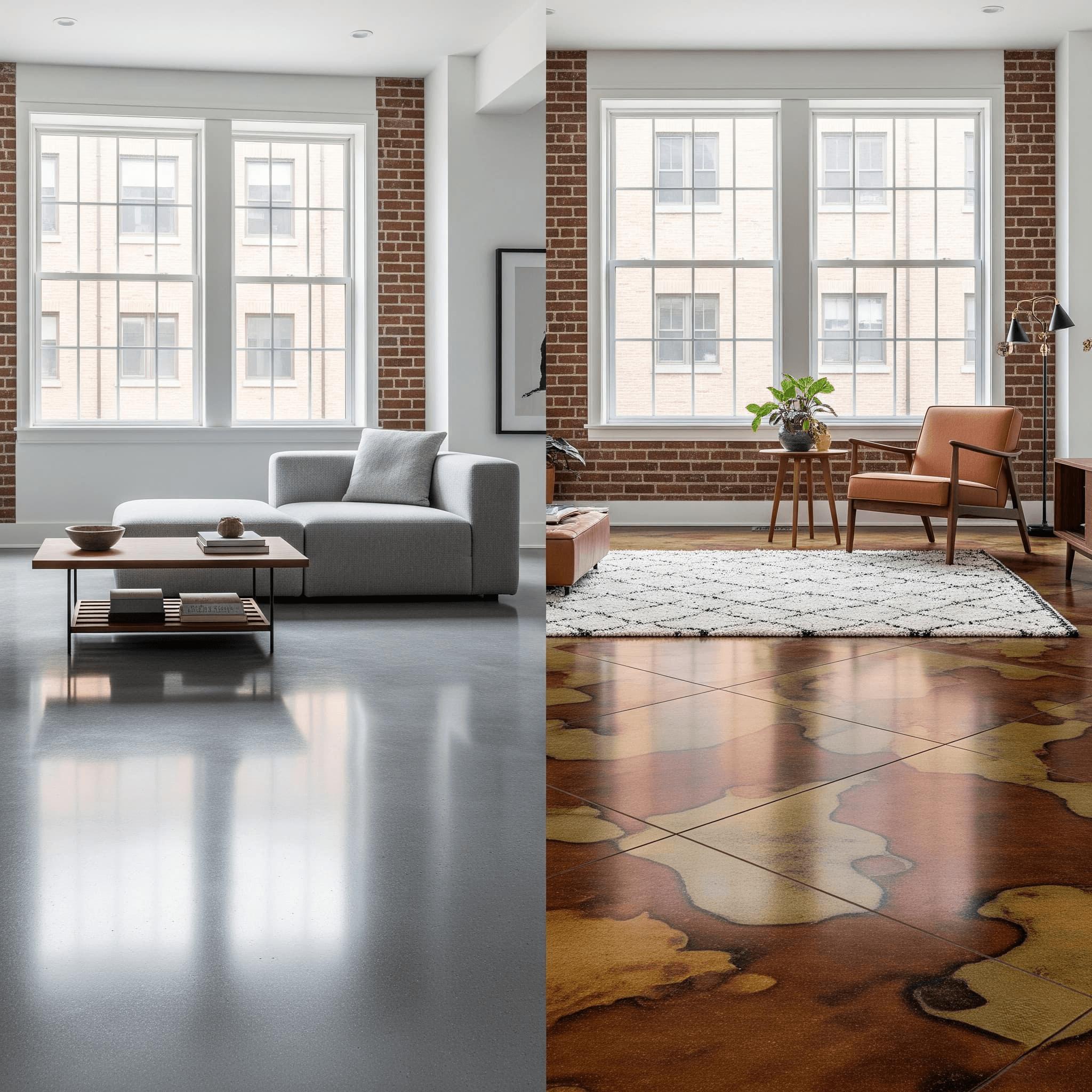
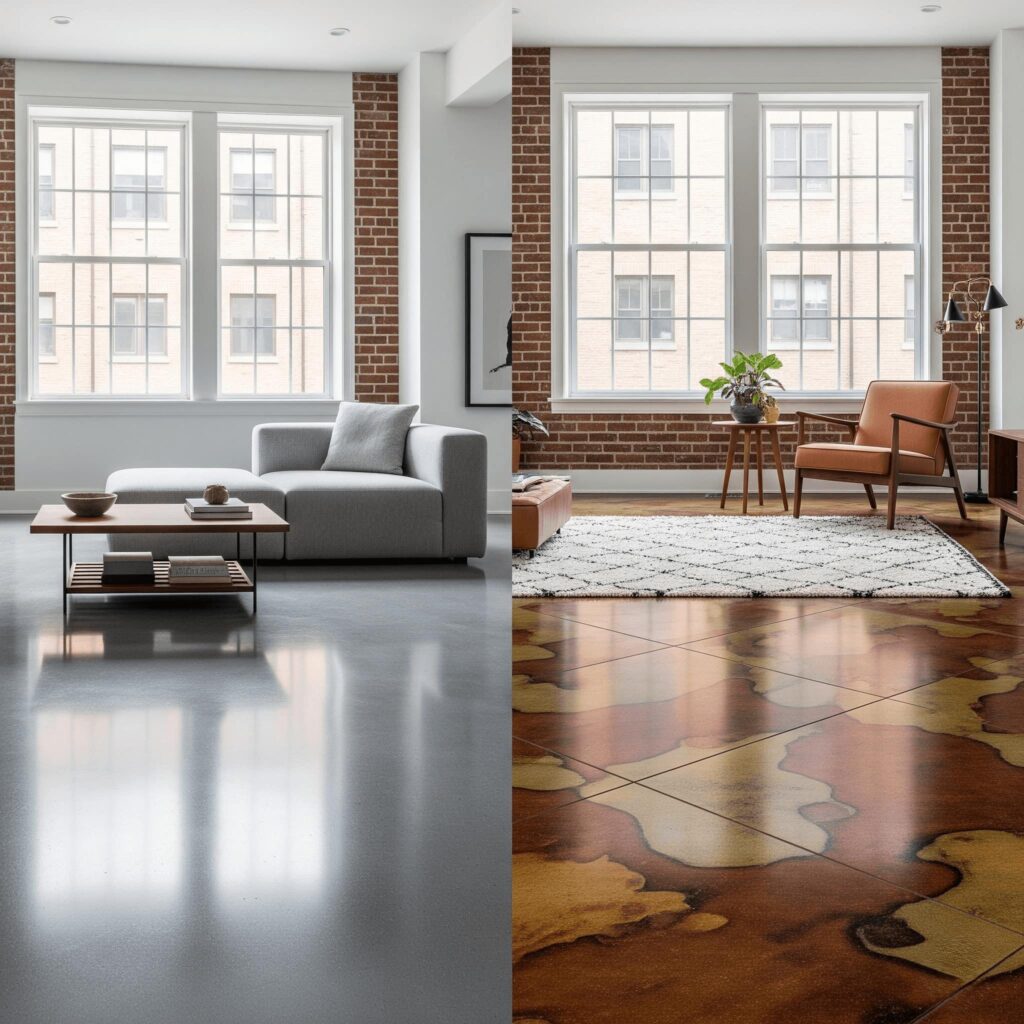
Polished concrete is achieved through the mechanical grinding and honing of concrete surfaces utilizing multiple-stage diamond abrasives. The result is an increasingly smooth, reflective finish similar to that of polished stone. Grinding the concrete also increases the density of the surface by closing the pores, which results in a naturally stain-resistant surface requiring very little maintenance.
The multi-stage process typically starts with coarse diamond grinding and continues through the application of liquid densifiers, then fine grinding, and finally polishing to attain the desired level of gloss. As such, an otherwise unremarkable piece of concrete can be transformed into an elegant, mirror-like surface that will reflect ambient lighting effectively.
Evaluating Stained Concrete Options
Stained concrete flooring utilizes chemical stains or dyes to create color and visual interest in concrete surfaces. Acid stains chemically interact with the concrete to produce variegated, natural-looking patterns, whereas water-based stains and dyes provide consistent color options. A protective sealer coating is applied after staining to protect the color and extend the durability of the surface.
As such, this type of decorative treatment can produce a wide range of creative designs, including faux finishes that simulate the look of natural stone, leather textures, and artistic patterns. In addition, multiple colors can be layered to produce varying degrees of depth and visual complexity to make each concrete installation unique.
Comparative Durability and Performance Characteristics of Polished and Stained Concrete
Due to its superior resistance to wear, scratches, and impacts, polished concrete is better suited for high-traffic environments. The extreme hardness created through the grinding process will allow for years of use in high-traffic environments (e.g., retail stores, warehouses, office buildings) before showing significant signs of wear.
While stained concrete does have good durability characteristics, additional maintenance is necessary. The protective sealer coating will generally need to be reapplied every few years based on traffic levels and environmental conditions. Stained surfaces can be refreshed and recolored if desired, providing additional design flexibility.
Environmental Conditions in Bridgeport Properties
The coastal environment surrounding Bridgeport, particularly high humidity levels along Long Island Sound, presents special challenges for concrete flooring. To prevent excessive moisture within the concrete, the proper sealing of polished concrete is essential. Due to the densified surface, polished concrete is well-suited for areas such as basements located near Seaside Park with high humidity concerns.
Temperature fluctuations commonly experienced during Connecticut winters require concrete floors to endure thermal cycling without cracking or delaminating. When properly installed with the correct joint spacing and substrate preparation, both polished and stained concrete are suitable alternatives for these types of environmental conditions.
Cost Analysis of Installation and Installation Factors
Generally speaking, polished concrete is more expensive to install ($2 to $5 more per square foot) compared to stained concrete. The increased initial cost is due to the need for specialized equipment and the multiple-stage grinding process involved in polished concrete. On the other hand, polished concrete has significantly reduced long-term maintenance costs due to its inherent durability and stain-resistance properties.
In contrast to polished concrete, stained concrete has a lower initial cost to install. However, the need for periodic sealer reapplication and additional maintenance requirements increases the long-term cost of ownership. Based on the intended use and budget constraints of residential customers in neighborhoods such as Black Rock and the North End, this cost difference can greatly influence the decision-making process.
Visual Aesthetic Applications and Design Flexibility
Polished concrete exhibits a clean and modern aesthetic quality due to the exposed aggregate and subtle shine produced by the polishing process. These qualities are compatible with many of the modern architectural design elements found in Bridgeport’s revitalized downtown area. Additionally, different levels of polish, from matte to high-gloss, allow for flexibility in selecting the desired degree of aesthetic quality.
On the other hand, stained concrete produces a visually striking effect due to the coloration and varied patterns produced by the staining and coloring process. Therefore, stained concrete is often preferred for residential spaces, restaurants, and retail establishments where the establishment of a unique atmosphere is beneficial. The varied patterns produced by stained concrete can also serve to camouflage minor surface irregularities and create visual interest.
Ongoing Maintenance and Long-Term Care
Polished concrete requires relatively little maintenance beyond the routine of sweeping and occasionally using a neutral cleaner to damp mop the surface. The densified surface of polished concrete resists staining and therefore does not require waxing or application of protective coatings. This reduced maintenance requirement is attractive to busy commercial organizations and homeowners alike.
Conversely, stained concrete requires more effort to maintain its appearance. Routine cleaning of stained concrete using appropriate products will help to prevent stain penetration and will assist in maintaining the appearance of the surface. Periodic reapplication of the protective sealer coating will help to extend the duration of time prior to the need for additional maintenance activities. Although stained concrete can be refreshed and recolored if desired, this is not possible with polished surfaces.
Recommended Applications for Each Option
Polished concrete is recommended for high-traffic commercial environments, modern residential interior environments, and environments requiring ease of maintenance. Properties adjacent to the Hartford HealthCare Amphitheater or commercial districts with high volumes of pedestrian and vehicular traffic would greatly benefit from the durability and professional appearance of polished concrete.
Stained concrete is recommended for decorative purposes, moderate-volume pedestrian traffic areas, and environments where the primary consideration is the visual impact of the surface rather than the ultimate durability of the surface. Residential basement environments, restaurants, and boutique retail spaces can utilize the artistic possibilities of stained concrete to create memorable environments.
Expertise and Professional Experience Needed to Implement Sustainable Concrete Materials
At Bridgeport Concrete Solutions, we assist property owners across the region in determining whether to select polished or stained concrete flooring for their property, based on their specific requirements, budgetary considerations, and aesthetic objectives. Our experience with regional environmental conditions enables us to ensure that installations are capable of performing well in Bridgeport’s unique climate and meeting our client’s expectations for visual appeal and functionality.
LATEST POSTS
Eco-Friendly Commercial Concrete Materials Popular in Bridgeport
October 2, 2025
No Comments
Decorative Concrete for Foundation Aesthetics in Bridgeport
September 30, 2025
No Comments