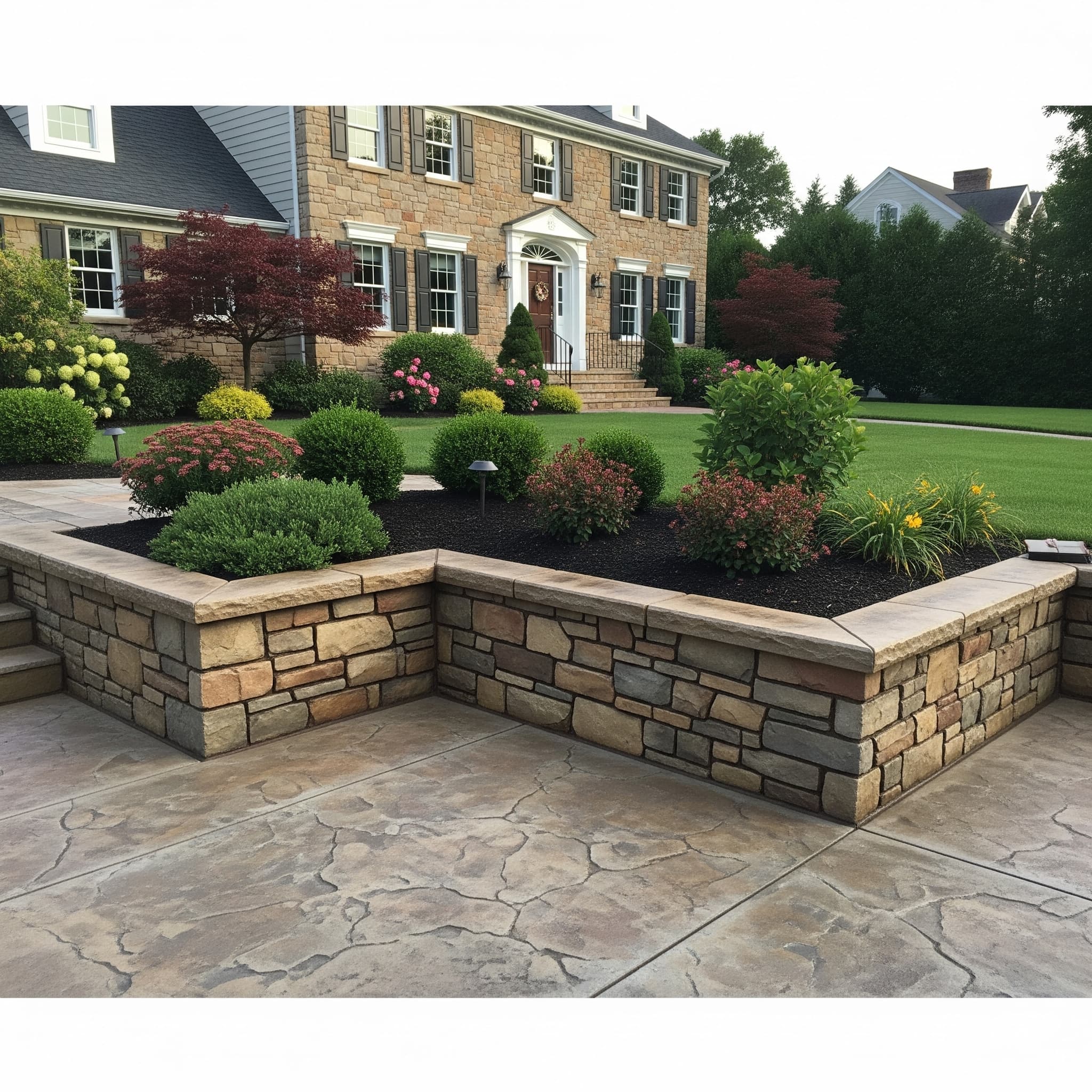
5 Tips Before Installing a Driveway in Bridgeport
Concrete Driveway Bridgeport
Planning a concrete driveway installation in Bridgeport requires careful consideration of local regulations, weather patterns, and construction standards unique to Connecticut’s coastal environment. Whether your home is situated near the historic Barnum Museum or in the residential neighborhoods around Beardsley Zoo, understanding these essential factors will ensure your driveway project meets both your expectations and Bridgeport’s municipal requirements.
1. Permitting & City Code
You will need to find out what permits are needed in Bridgeport before you begin installing your new driveway. The cost for a sidewalk, curb, and driveway-apron permit is $150. Only licensed and bonded concrete contractors can obtain this permit from the City of Bridgeport.
Documentation Needed for Permit Applications
To apply for a permit for your new driveway, you will need to submit several documents. These will include the actual address where the work is being done, the name of the cross street, the type of work being done, the length in linear feet of the excavations, and a CBYD reference number. You will also need to submit a traffic plan detailing how you will place the necessary traffic-control devices and pedestrian walkways. This is most important for locations that have high traffic, such as the area around Webster Bank Arena or downtown Bridgeport.
Pre- & Post-Inspection Requirements
Once you have been issued a permit for your new driveway, your contractor will need to contact the permits department to schedule both a pre-inspection and a post-inspection. In addition, if the construction of your driveway will affect traffic flow, you will need to coordinate with the local police office for traffic control. This is especially true for driveways located along major highways leading to attractions, such as the Hartford HealthCare Amphitheater.
2. Thickness and Load-Bearing Capacity
When it comes to the thickness of your driveway, the structural capacity and longevity of the concrete are directly related. For standard residential driveways with a maximum vehicle weight of 4,000 pounds, a minimum of 4 inches of thickness is required. However, an increase in thickness from 4 to 5 inches will increase the load-bearing capacity by approximately 50%, while only adding 10% to the cost of materials.
Vehicle Type Considerations
If you own a recreational vehicle, delivery truck, or heavy equipment, you may need a 5- to 8-inch-thick driveway to handle the weight of these vehicles. Residents who live near Pleasure Beach or Fayerweather Island Light may want to consider having their driveways built with increased thickness to account for the weight of the vehicles they use.
Options for Reinforcement
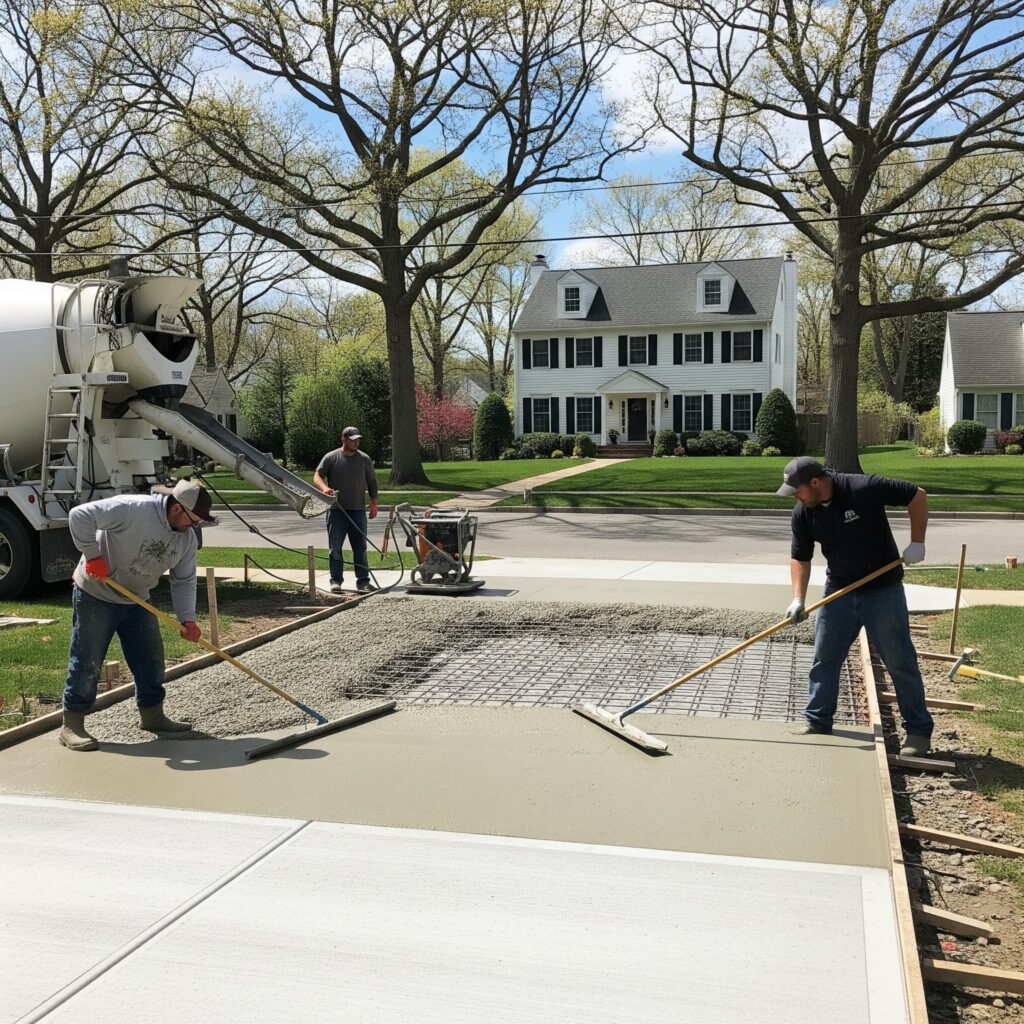
For driveways that are 4 to 5 inches thick, wire mesh is sufficient. For thicker driveways, steel rebar in a 12-inch grid pattern is recommended. Regardless of the method used, proper placement of the reinforcement is key to avoiding structural problems that are common in coastal environments where there are frequent freeze-thaw cycles.
3. Soil Condition Evaluation & Site Preparation Standards
Due to the fact that Connecticut has so many different types of soil conditions, especially in the coastal areas surrounding Long Island Sound, it is very important to evaluate the soil conditions prior to beginning any concrete driveway installation. A professional contractor will perform soil core sampling and load-bearing capacity testing to determine subgrade stability and composition.
Compaction Requirements
Prior to preparing your site, you will first need to remove any organic materials and existing fill to get to the native soil. Once the site has been prepared, the contractor must achieve a compaction rate of at least 95% using either a nuclear densimeter or proctor testing. If the soil is clay-based or poorly drained, additional base preparation will likely be needed, with a minimum of 4 to 6 inches of compacted gravel aggregate.
Drainage Considerations
Your concrete driveway should be sloped towards the street and away from any adjacent buildings with a minimum slope of 1/8 inch per foot. Due to the proximity of water features and/or the unique topography of some areas, such as Seaside Park or near St. Margaret’s Shrine, special drainage considerations may be necessary.
4. Weather Impact on Concrete Curing
Due to its coastal location, Bridgeport’s weather conditions can have a significant effect on concrete curing and installation schedules. Connecticut experiences freeze-thaw cycles that can damage concrete; therefore, air-entrained concrete with 5 to 7% air content by volume is essential to minimize this risk.
Best Time for Installation
The ideal time to install a new concrete driveway is during the spring, summer, and early fall months when temperatures are relatively consistent. Extremes in temperature can negatively impact concrete strength development and require longer curing periods to achieve the specified 4,000 psi compressive strength.
Protection of Newly Installed Concrete
Immediately following completion of the finish, newly installed concrete must be cured properly to ensure the concrete reaches full strength. Neglecting to properly cure the concrete can lead to significant losses in strength, particularly in coastal environments where exposure to salt air and moisture accelerates deterioration.
5. Costs & Quality Standards
The cost of a concrete driveway in Bridgeport ranges from $7 to $12 per square foot, depending on the type of concrete used. Costs associated with demolishing an existing surface, obtaining a permit ($150), traffic-control requirements, and compliance with Connecticut State Standards for Materials Specifications are not included in this estimate.
Requirements for Material Quality
High-quality concrete mixes with a 4,000 psi compressive strength and a proper water-to-cement ratio will provide optimal load-bearing performance. Air-entrained concrete is required for driveways exposed to Connecticut’s freeze-thaw cycles and is particularly important in Bridgeport’s 16-square-mile area of diverse neighborhoods.
Considerations for Long-Term Value
A well-installed concrete driveway will generally last 25 to 30 years with proper maintenance. Homes near cultural attractions, such as the Discovery Museum, or in established neighborhoods around Mountain Grove Cemetery, will benefit from a professional installation that will maintain the aesthetic appeal and structural integrity of the home throughout the changing seasons.
Expertise and Professional Experience Needed to Implement Sustainable Concrete Materials
At Bridgeport Concrete Solutions, our experienced team understands the specific requirements for the installation of a concrete driveway in Connecticut’s coastal environment. From the initial application of a permit to the final inspection, we handle all aspects of the permitting process to ensure your project complies with local codes and quality standards. We follow industry-recognized procedures for thickness specification, reinforcement methods, and weather-sensitive installation techniques to construct durable driveways that increase your property value and withstand the varied climate conditions of Bridgeport for generations to come.
LATEST POSTS

Polished vs. Stained Concrete Flooring: What Works in Bridgeport
Eco-Friendly Commercial Concrete Materials Popular in Bridgeport